Even though most bacteria are benign or even helpful, some are best avoided, especially those found in raw food or waste. Making every effort to clean and disinfect the areas you touch the most is crucial in sensitive spaces like the kitchen and bathroom.
Homemade disinfectant spray can be used to remove spills, stains, oily fingerprints, and unpleasant smells throughout the house when the right ingredients are used. For almost every surface, we listed the top homemade disinfectant spray.
Importance Of Making Homemade Disinfectant Spray
Here are some things you should know about using a homemade disinfectant spray before we get into how you can make your DIY disinfectant spray.
Compared to ordinary soap and water, antibacterial solutions like sprays, wipes, and soap are more efficient and work faster when disinfecting surfaces around your house. They eliminate around 99% of the bacteria and germs in your house.
Germs are particularly prevalent in the bathroom and kitchen. For these kinds of places, we advise using store-bought disinfectants. The living room and bedrooms, which are low-risk areas of your house, can be kept clean and sanitary with a homemade disinfectant spray.
Ways to Make Homemade Disinfectant Spray In Canada
All-Purpose Scented Cleaner
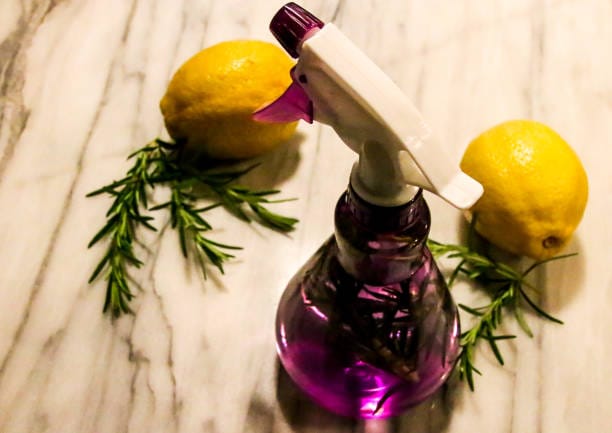
You’ll need lemon rind, rosemary sprigs, and 1 part white vinegar to 1 part water.
Fill a spray container with the components above, shake, and wait to infuse for a week before using. You can also try cinnamon sticks, cloves, or orange rinds for a distinct smell. After a week, you can clean garbage cans, remove smudges on walls, and much more with the homemade all-purpose cleaner. The lemon rind may have additional cleaning properties beyond its fresh aroma.
Be careful when using acidic cleaners on granite, as they can etch the stone. You must also use caution while cleaning stainless steel. Certain manufacturers advise avoiding using vinegar on the surfaces of their appliances.
All-Purpose Dish Soap Cleaner
You’ll need one cup of water, ¼ teaspoon dish soap, and four to six drops of essential oil (optional).
Fill a spray container with water, liquid dish soap, and four to six drops of your preferred essential oil. Shake the mixture. You may use this concentrated cleaning spray to remove smudges and spots on stainless steel appliances, countertops, and the interior of your refrigerator, as well as oily fingerprints off painted walls. This cleanser can remove dust from baseboards, window sills, and other surfaces when used with a microfiber cloth; however, do not use dish soap on wood surfaces.
Air Freshener Cleaner
You’ll need water, 5 to 6 drops of essential oil, and 1 tablespoon of baking soda.
Put five to six drops of your preferred essential oil into a small dish with one tablespoon of baking soda. In terms of fragrance, most homeowners adore grapefruit, peppermint, orange, lavender, and rosemary. Mix the essential oils and baking soda with a spoon until well blended. Fill a spray bottle with water after pouring the baking soda mixture into it. Before misting your home’s odorous spots, such as the restroom or the area around trash cans, shake the solution.
Glass Cleaner
You’ll need 1/4 cup 70% concentration rubbing alcohol, 1/2 cup white or cider vinegar, 2 cups water, and one or two drops of orange essential oil for scent (optional).
Your windows and mirrors will shine after using this cleaning spray. Just mix these components and put them in a spray bottle to create a spray using supplies you already own. Not only does it clean well, but the rubbing alcohol helps it evaporate rapidly, reducing streaks and spots, and the orange essential oil gives it a pleasant, natural citrus aroma.
Carpet Stain Cleaner
You’ll need one cup of water and ¼ teaspoon liquid dish soap.
Fill a spray bottle with one cup of water and ¼ teaspoon of liquid dish soap, then shake to mix. Dab the stain with a microfiber cloth sprayed with the solution. After the stain has been removed, rinse the area with soap by spraying it with clean water from a second spray bottle. After thoroughly blotting, let it air dry.
Natural Stone Cleaner
You’ll need one teaspoon of dish soap, ¼ cup of rubbing alcohol, ¾ cup of water, and up to 10 drops of essential oil (optional).
Regular cleaning is necessary for marble flooring, kitchen countertops, bathroom tiles, and other stone surfaces; however, natural stone can be damaged by aggressive detergents or acidic substances like vinegar and lemon. In a spray bottle, mix ¼ cup rubbing alcohol, ¾ cup water, and a teaspoon of dish soap to make this natural stone cleaner, then shake. If you want scented cleaners, you can add up to 10 drops of an essential oil.
Grease Cleaner
You’ll need water and two tablespoons of sudsy ammonia.
Spot-clean the oven or microwave, and use it in a spray bottle to clean greasy stovetops. Use this homemade oven and kitchen cleaning to remove grease. The detergent in sudsy ammonia helps remove stubborn dirt from metal surfaces. Fill a spray bottle with water after mixing two teaspoons. After spraying the solution, spot-clean the oven, stove hood, and microwave, and use a sponge or towel to clean greasy stovetops.
Ammonia should not be applied to aluminum. It may become darker and develop pitting.
Safety Factors To Remember
It is essential to use caution when making and using this homemade disinfectant spray at home. Make sure there is enough airflow in the space. This is important, particularly if there is alcohol in your mix. Excessive exposure to the fumes can cause discomfort. Avoid getting the spray in your eyes or on your skin. And always position it in an area that is difficult for pets or children to access.
Keep in mind that marble and granite should not be treated with this spray. It could leave scars. Do a thorough cleaning before disinfecting. This improves the spray’s performance.
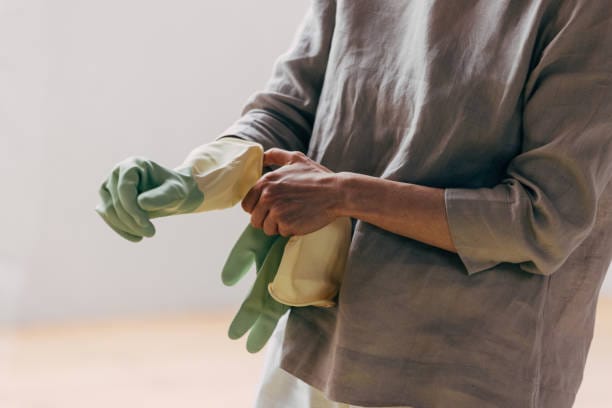
Do you or any family members have asthma? Always use caution when using disinfectants, as they can be more harmful to the lungs. When cleaning, keep windows open and wear gloves to protect your hands from chemicals.
By taking one easy action, you can reduce the risk of becoming unwell from using strong cleaning chemicals.
An effective way to keep sensitive spaces like bathrooms and kitchens clean and hygienic is to use homemade disinfectant sprays. They can remove spills, stains, oily fingerprints, and unpleasant smells. Grease cleaners, glass cleaners, carpet stain removers, air fresheners, scented all-purpose cleaners, and dish soap-based cleaners are typical choices. Nonetheless, it is essential to use homemade sprays in low-risk areas and store-bought disinfectants in high-risk areas. Gloves are also necessary, as are proper ventilation and avoidance of contact with the skin and eyes.
Sarah is part of the content team at No More Chores, Toronto's highest-rated residential cleaning service. Drawing on 10 years of hands-on cleaning expertise and thousands of jobs across the GTA, she covers home cleaning tips, service guides, and practical advice for keeping your home in top shape.